

Toy Story 5 ISN’T for Kids… and Here’s Why.
*Spoilers Ahead*
As my best friend and I ventured to seats D7 and D8 on a faithful Friday evening, we couldn’t help but notice the influx of quicker, more energetic little footsteps flooding the theatre. Sinking into my recliner, so did a 5-year-old boy to my left, bunny toy in hand. I giggled to myself, mentally sifting through memories of how relentlessly impatient I’d get sitting through movie trailers, in true anticipation of the main event. With the main event in this case being Toy Story 5, I expected nothing less than a Pixar classic, holding true to the Disney formula and delivering a feel-good, action-packed experience for the whole family to enjoy. However, when the movie ended and the children raced out of their seats to dance to the end credit tunes, my friend and I remained frozen in time. We sat there, along with the parents and young adults of the theater, tears pooling at the tips of our chins. Because this film wasn’t for the kids of today– it was a love letter to the grown-ups who aged alongside Woody, Buzz, Jessie, and the rest of the Toy Story cast.
Toy Story is a franchise I cherish deeply, not only due to its significance within the infamous Pixar theory, but also because of the feats it has made in animation. The debut was the first ever feature-length film produced entirely by computer-animated images (CGI) put to the big screen. If you were to watch Toy Story 1 in conjunction with Toy Story 5, the difference is night and day. The cinematography in the latter film was breathtaking, marking a true turning point for the standard of animated features to come. The way animators manipulated light and color to display tone shifts (and as a means to pull at our heartstrings) is genuinely astounding. Specifically with the Buzz Lightyear sideplots, I really enjoyed the nod to dystopian Sci-Fi in both plot and color-grading with the Buzzes as a unit. It's hard to make a character’s arc interesting when there’s about 1000 of them on screen, but somehow Pixar made it work.
The commentary by this film was on-the-nose, but in a way that was easy to stomach. Technology is becoming everpresent in our society, and there’s no true way to stop the damaging effect it has on our children’s mental health and well-being; however, there are ways to adapt, just as we saw with Lilypad, a rendition of an iPad or tablet, being used to film the toys’ adventures rather than taking away time from real play. It was a realistic, bold approach, one that was almost impressive as the character development we saw from resident sheriff Jessie.
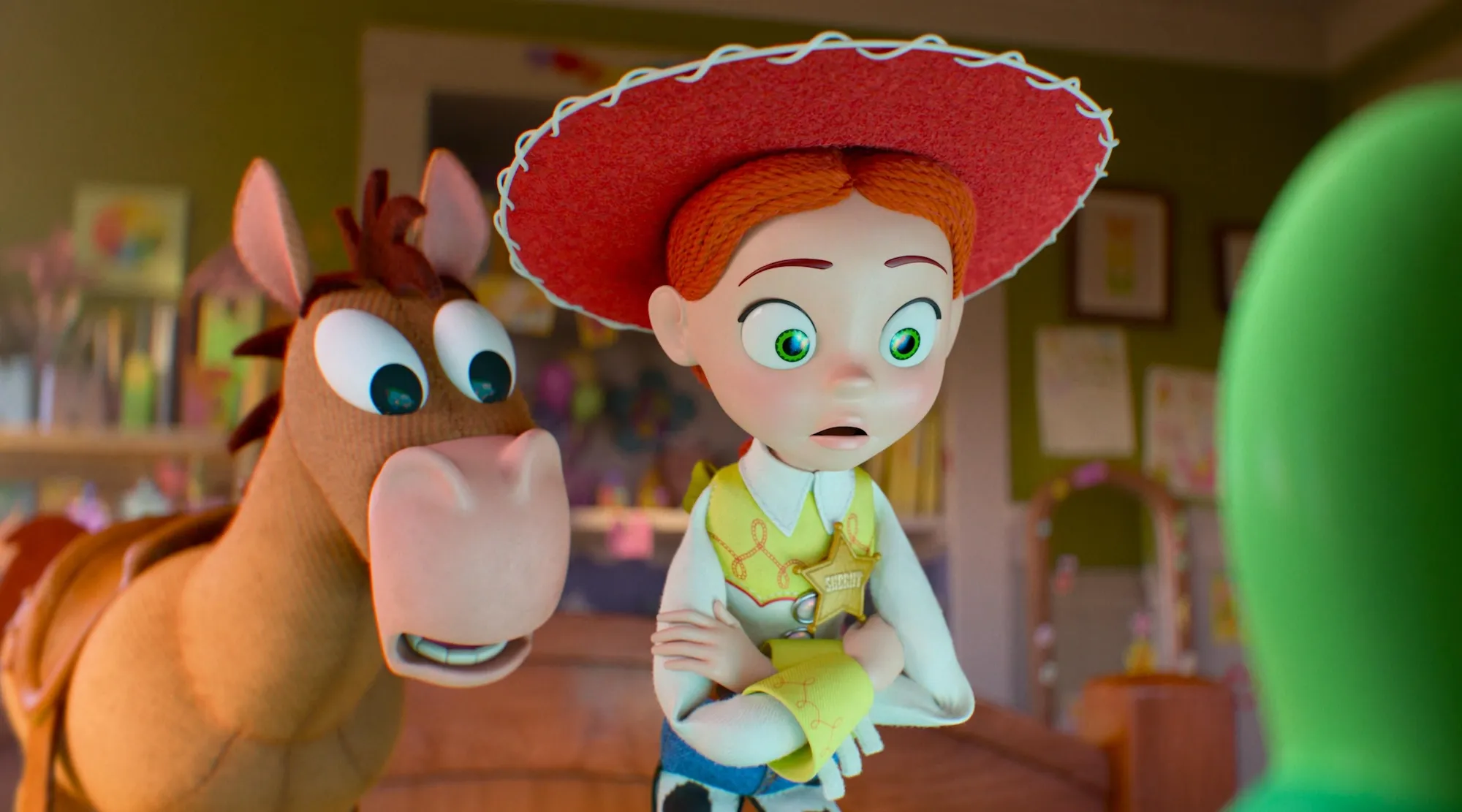
The true nexus of the Toy Story unfolds when Jessie finally discovers that her owner Emily, whom she once believed abandoned her, did not leave the cowgirl’s legacy in the dust. The trauma of Jessie’s abandonment issues crept behind her through the entire franchise, leading her to assume she was just never good enough to be someone’s permanent toy. This cycle comes to an end when she discovers Emily’s keepsake box buried deep beneath the tireswing she once swung on, learning that her former owner was now mother to a child fittingly named, Jessie. This sent a clear message.
Growing out of your toys, hobbies, and experiences is part of leading a fulfilling life. It’s okay to leave behind your past because it will always seep through in nuanced ways into your future, even if that means 5, 10, or 15 years later. Toy Story 5 left me in shambles and wanting more, so for those claiming the franchise has become a cash grab, so be it (take my money). I grew up alongside Andy, the original owner of Woody and Buzz, and outlived his screentime. When I sit down in the theater and witness that Pixar lamp crushing the soul out of “I”, my heart skips a beat; and that’s because I’m suddenly 8 years old again, kicking my feet that barely reach the end of the recliner, impatiently waiting for the movie to commence.